As an Amazon Associate I earn from qualifying purchases.
Pick a converter when the desk is already working
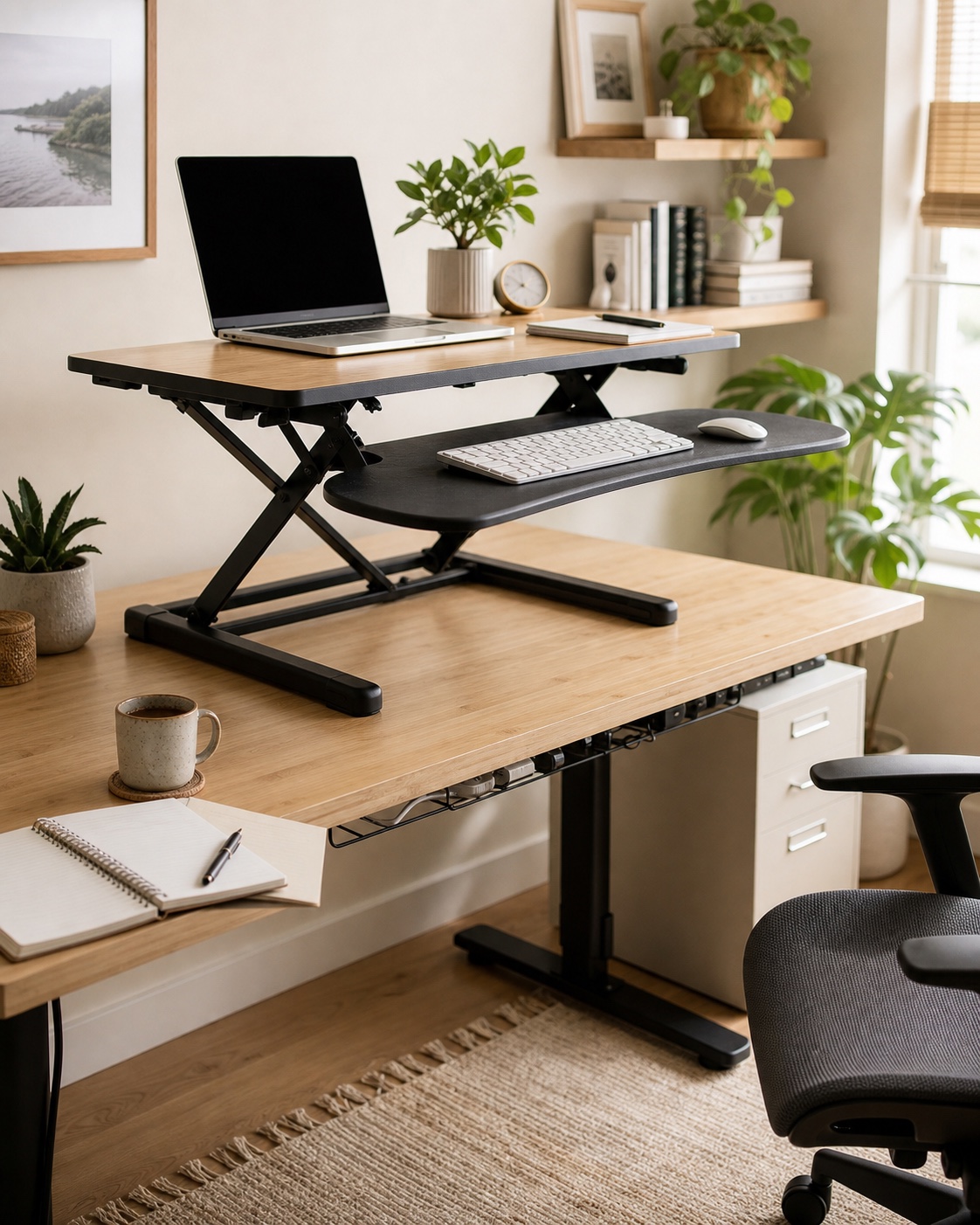
A standing desk converter is usually the better first step when your current desk is sturdy, the room is tight, and you are not ready to replace everything. It changes the height of the main work zone without asking you to buy a new frame, top, cable setup, or chair.
That makes converters especially useful for renters, first apartments, and mixed-use rooms where a full desk swap would create more disruption than benefit.
Pick a full standing desk when the base setup is the real problem
A full standing desk makes more sense when the current desk is too shallow, wobbly, or visually heavy for the room. It is also the cleaner long-term option if you need more legroom, use a larger monitor setup, or want the whole work surface to move together instead of sitting on top of another desk.
Think of a converter as an upgrade layer. Think of a full standing desk as a reset.
Space changes the answer faster than price does
Converters save money, but they also add height and another platform. In a very small room, that can still work well if the original desk footprint is right and the screen height stays manageable. A full standing desk takes more budget, but it often looks calmer because it removes the stacked-on-top effect.
If the room already feels crowded, measure how much depth the converter tray adds once the keyboard and mouse are in place. That single check will tell you more than a feature list.
The safest use case for a converter
A converter is easiest to live with when the desk only needs one laptop or one monitor, a keyboard, and a few small tools. Once the desktop starts carrying speakers, storage bins, a heavy arm, or a lot of decorative objects, a full desk usually becomes the cleaner choice.
Browse standing desk converters on Amazon
Recommended starting point
Product images are added only from approved affiliate/API assets.
Vari VariDesk Essential 36 standing desk converter
This is the practical choice when you already have a desk you like and want a two-tier converter that adds standing flexibility without rebuilding the whole room around a new frame.
See some options on AmazonSimple buying order
- Check the current desk: keep it only if it is stable and deep enough for your real workday.
- Test screen height: make sure the monitor or laptop will not end up uncomfortably high once the converter is raised.
- Plan cable slack: cords need enough length to move cleanly between sitting and standing, and the easiest fix is often bringing one power strip up to desk height.
- Keep the rest minimal: the fewer loose objects on the platform, the easier a converter is to use daily.
Bring power up to the converter instead of chasing cords on the floor
If you test a standing desk converter for a week and already hate the cable reach, the desk itself may not be the problem. The faster fix is often a clamp-on power strip at desk height so the laptop charger, task light, and phone cable all stay within reach when the platform moves.
This works best when the converter is staying on an existing desk and you want one cleaner charging zone instead of a tangle hanging toward the outlet. It also makes the setup feel more intentional in a small room because the desktop no longer depends on one power brick hidden under the back edge.