As an Amazon Associate I earn from qualifying purchases.
Start with the least intrusive wall
In a bedroom, the best office wall is usually the one that does not interrupt the bed path, closet doors, or dresser drawers. A desk can look good in a photo and still make the room annoying to use if the chair blocks the daily route through the space.
Before buying anything, mark the desk depth on the floor with painter's tape. Then pull a chair back as if you were sitting down. If the chair hits the bed or leaves no walking path, choose a narrower desk or a wall-mounted surface.
Browse wall-mounted desks on Amazon
A fold-down option such as the MM MELISEN solid wood wall-mounted folding table works when preserving chair pull-back room matters more than keeping a permanent full-depth desk open all day.
Use a real desk if you can, but keep it shallow
Many small bedrooms need a desk between 18 and 24 inches deep. That is enough for a laptop, notebook, lamp, and small monitor, but it does not take over the room like a full office desk. If you use a monitor, check both depth and height so the screen does not make the corner feel heavy.
A simple writing desk, compact computer desk, or wall-mounted desk can all work. The important part is not the label. It is whether the surface is stable, the chair fits underneath, and the desk does not become a second dresser.
Browse small writing desks on Amazon
Choose a chair that tucks in cleanly
A bedroom office often fails because the chair is too bulky. Look for a chair that fits under the desk, moves easily on the floor or rug, and has enough support for the length of your work sessions. If you work long days, comfort matters more than a perfectly decorative chair.
For very tight rooms, measure the chair width, arm height, and wheelbase. Arms can be useful, but they are a problem if they stop the chair from sliding under the desk.
Browse compact office chairs on Amazon
Create a visual boundary without adding clutter
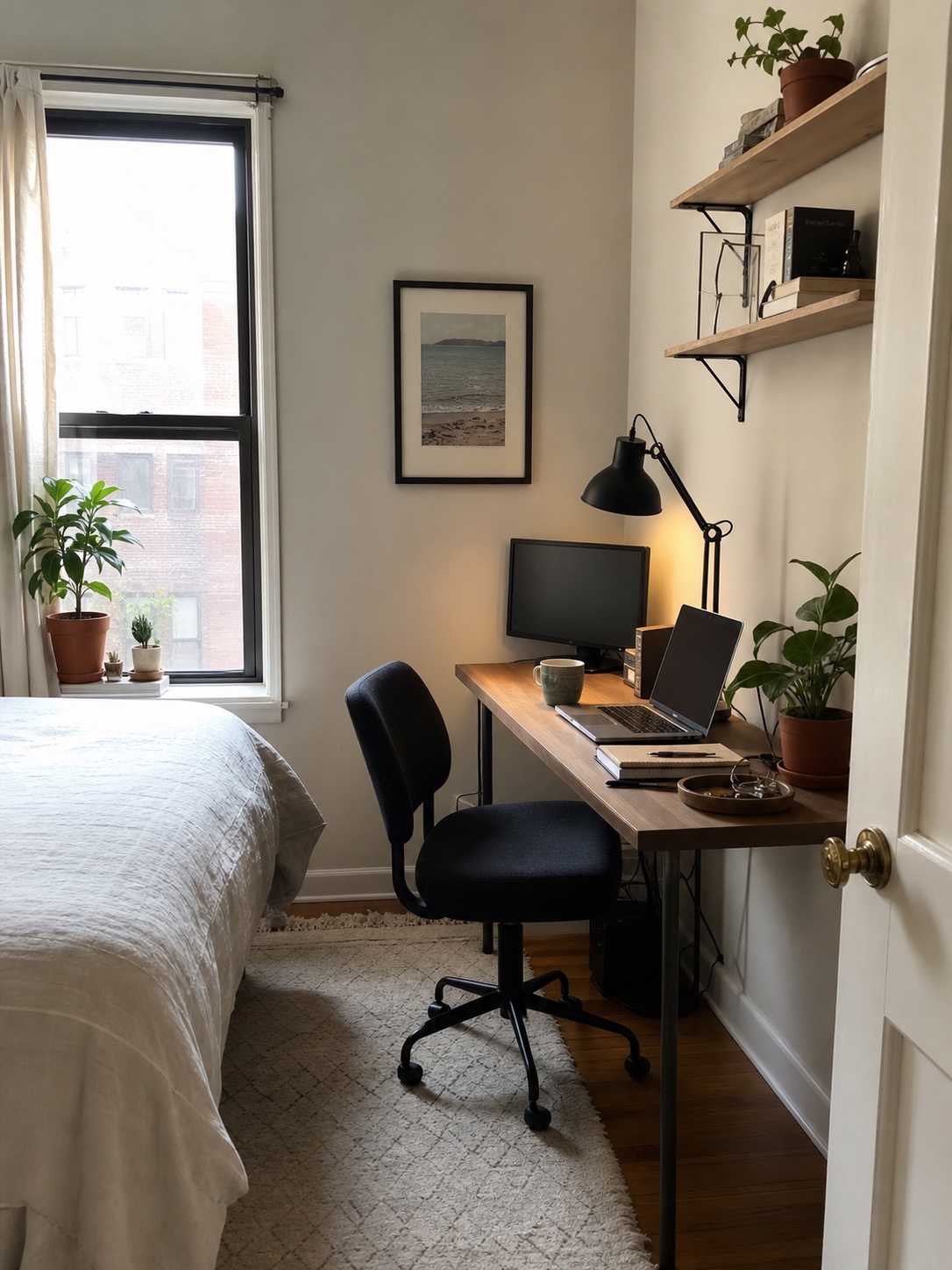
The workspace should feel separate from the bed, but a small room usually cannot handle a heavy divider. Use lighter boundaries instead: a small rug under the chair, one framed print above the desk, a wall shelf, or a lamp that clearly belongs to the work zone.
Keep the palette connected to the bedroom. Wood, white, black, linen, soft green, and warm metal finishes tend to blend better than bright office colors.
Browse small wall shelves on Amazon
If the room needs vertical storage more than a wider desktop, a piece like the Sunmory 5-tier corner shelf stand can hold notebooks, a lamp, and work supplies without pushing farther into the sleeping area.
Hide the workday at night
A bedroom should not remind you of unfinished work from across the room. Add one tray, box, drawer, or lidded basket for the items that make the desk look active: notebook, pens, cables, sticky notes, and charging bricks.
The nightly reset should take less than two minutes. If it takes longer, the storage system is too complicated for daily use.
Browse lidded storage baskets on Amazon
If the desk needs more supply storage but the room cannot handle a bulkier piece, a slim rolling storage cart can hold paper, chargers, and small tools beside the desk and still tuck out of the main bedroom path.
Think about light from both directions
Window light is useful during the day, but it can cause glare if the screen faces the window directly. If possible, place the desk so daylight comes from the side. Then add a small task lamp for evening work, preferably one that lights the keyboard and notebook without shining into your eyes.
Browse small task lamps on Amazon
Bedroom office buying order
- Desk footprint: choose the size that preserves walking space first.
- Chair fit: make sure the chair tucks under the desk and supports your actual workday.
- Lighting: add a task lamp before buying decorative extras.
- Cable control: use clips, a sleeve, or a small cable box so cords do not become the first thing you notice.
- One visual anchor: finish the zone with a shelf, print, plant, or tray.
Quick checklist
- Can the chair pull out without hitting the bed?
- Can closet and dresser doors still open fully?
- Does the desk have a place for cables to disappear?
- Can the work items be hidden or reset at night?
- Does the lighting work for both daytime focus and evening calm?
Recommended small-room add-on
Product images are added only from approved affiliate/API assets.
Slim rolling storage cart
Use this when the bedroom office needs room for notebooks, chargers, and daily supplies but a deeper desk would choke the walkway. A narrow cart adds storage beside the desk and can roll aside when the room needs to feel less like a workspace.
See this rolling storage cart on Amazon